DKarbonation
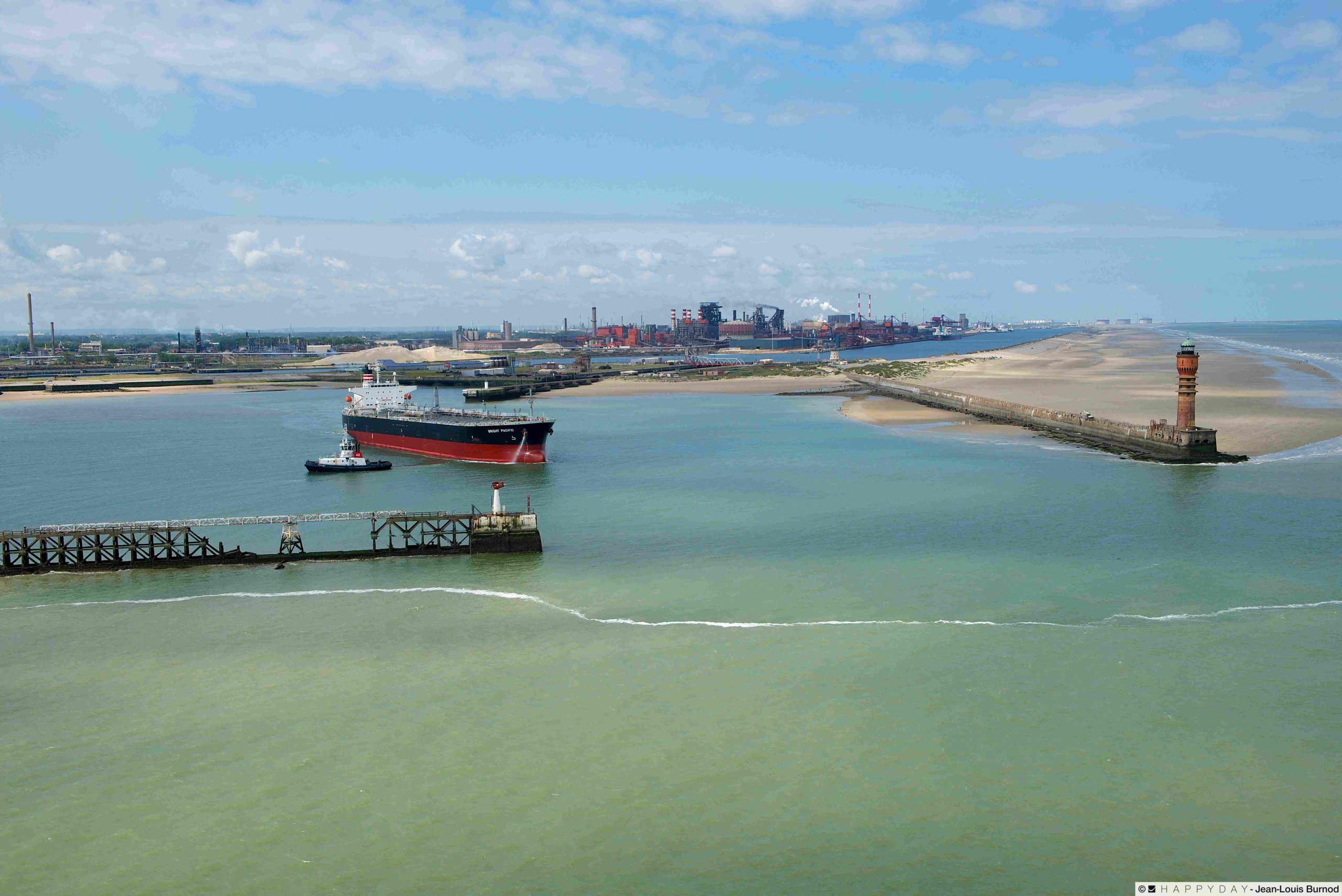
Already recognised as being exemplary in its efforts to reduce CO2 emissions – with the aim of achieving a 30% reduction by 2030 and carbon neutrality by 2050 – Dunkirk has won the first ever ‘Low Carbon Industrial Areas’ (ZIBaC) call for projects. Commissioned by the Ministry of Industry through the French Agency for Ecological Transition (ADEME), the ZIBaC scheme will help ÉcosystèmeD, a public interest group and its partners, to conduct engineering and feasibility studies relating to the reduction of carbon emissions, with a budget of 23.6 million euros, of which ADEME will provide up to 50% as a subsidy, or 11.8 million euros.
Dunkirk, a land of low-carbon industry and mobility
Dunkirk, the leading provider of decarbonization solutions… Discover the transformation of this region’s economic, production, and consumption models!
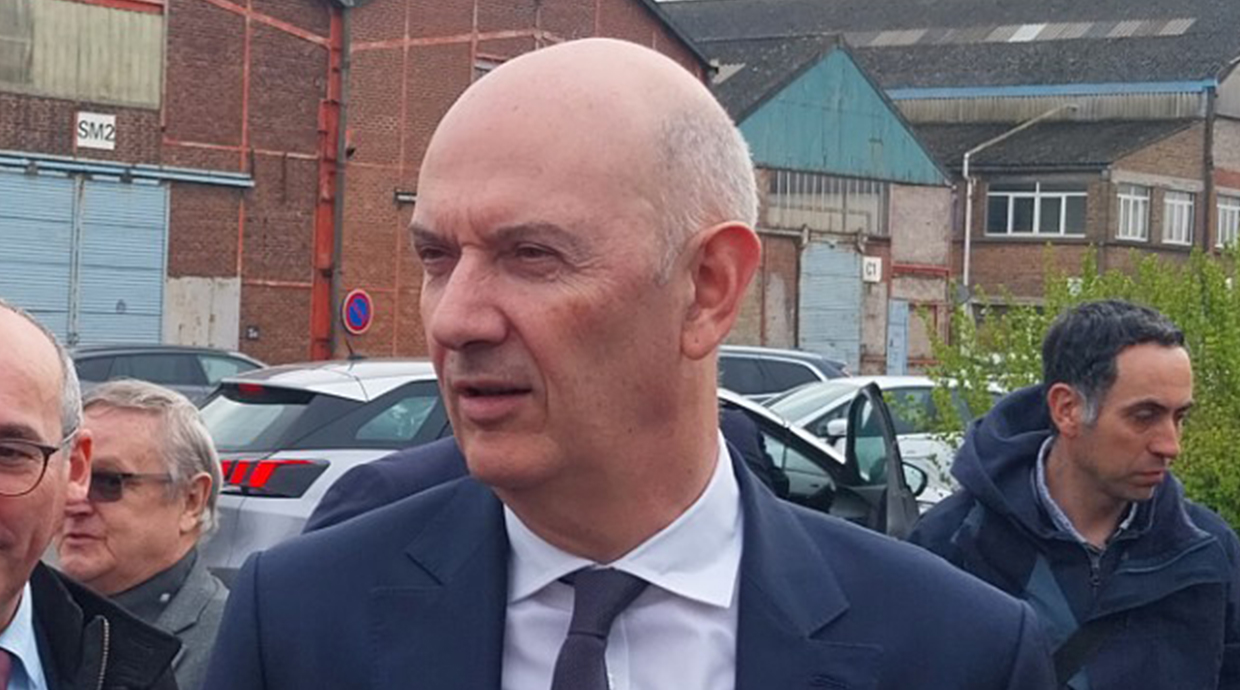
At the announcement of the winners of the project, Roland Lescure, Deputy Minister for Industry, referred to Dunkirk as a “pioneering” region, saying:
“In the future, the region’s appeal will be measured by infrastructures essential for the low-carbon industry: electricity, green hydrogen and CO2 capture. I’m sure that the creation of low-carbon industrial areas across all of France’s large industrial basins will help us make it one of the most attractive countries in the world for green industries.”
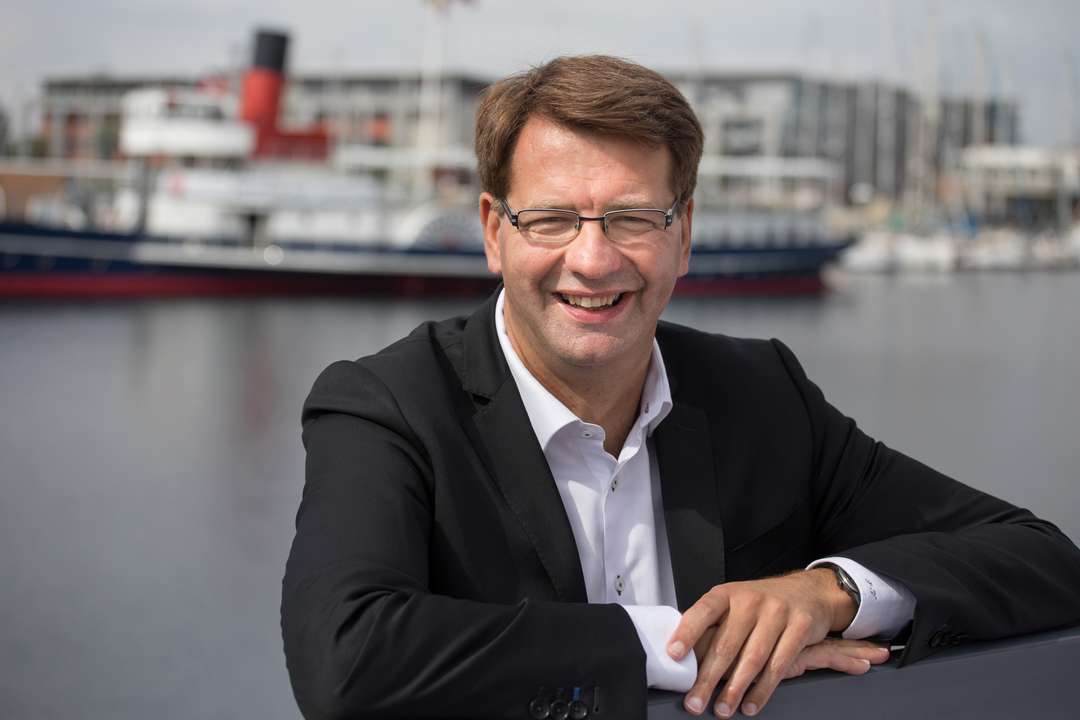
Patrice Vergriete, Chair of the Greater Dunkirk Urban Council
“Dunkirk, a pioneer in the decarbonisation of French industry, has made the ecological transition a major lever for the green reindustrialisation of its industrial area. As part of the French government’s France 2030 investment plan, this ZIBaC funding will enable us to continue accelerating our drive for industrial competitiveness by making mass investment in the technologies of the future and supporting the ecological transition to improve production and meet environmental challenges. Alongside our European partners, France’s ambitious objective to combat global warming is one of the priorities when it comes to meeting the carbon neutrality goals on the European continent by 2050”.
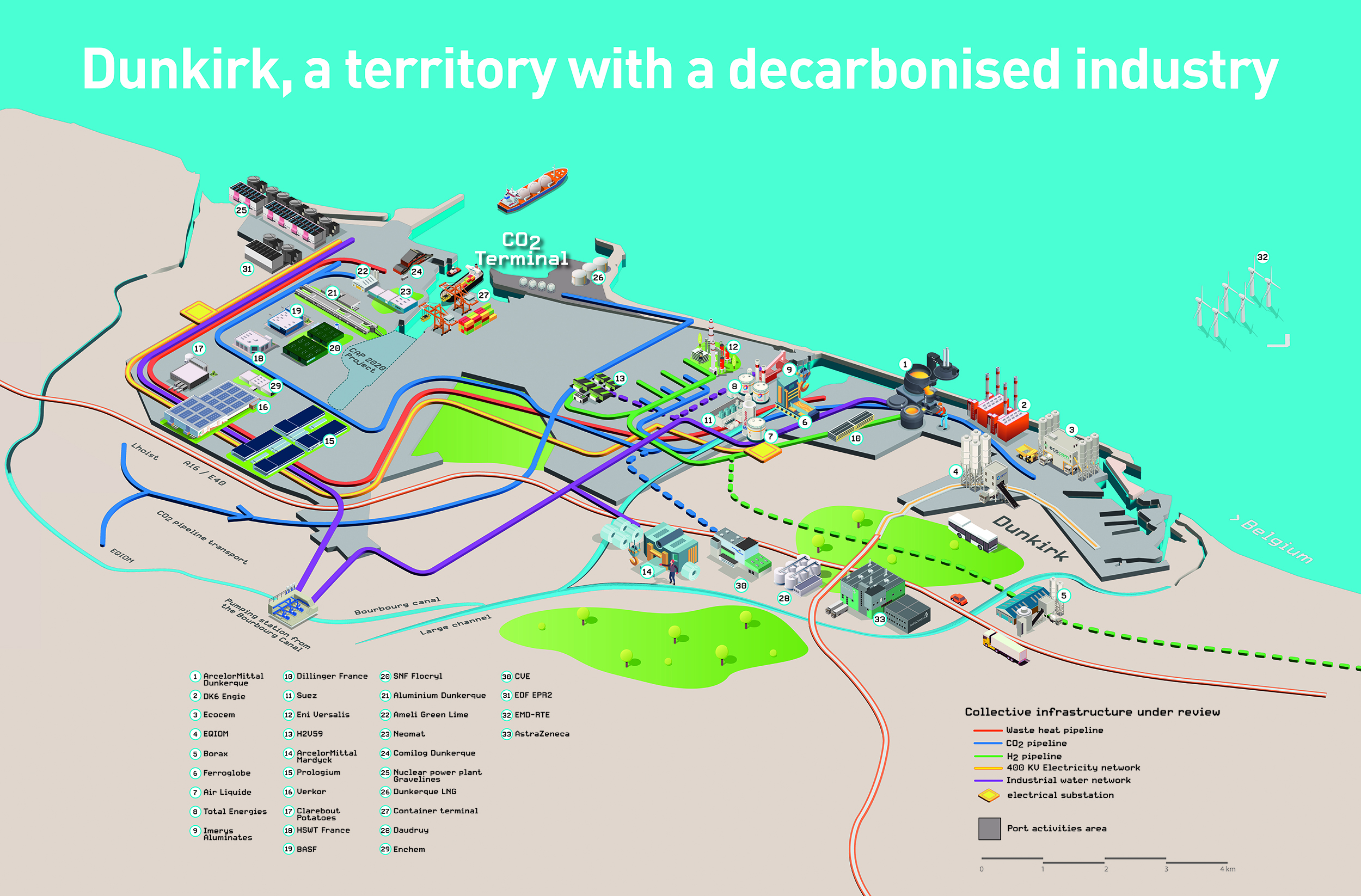
Dunkirk’s port and industrial area represents 20% of France’s industrial CO2 emissions. However, “there will be no decarbonisation without infrastructure. And the 2030 target is only credible if projects are launched now,” says Rafael Ponce, Managing Director of ÉcosystèmeD.
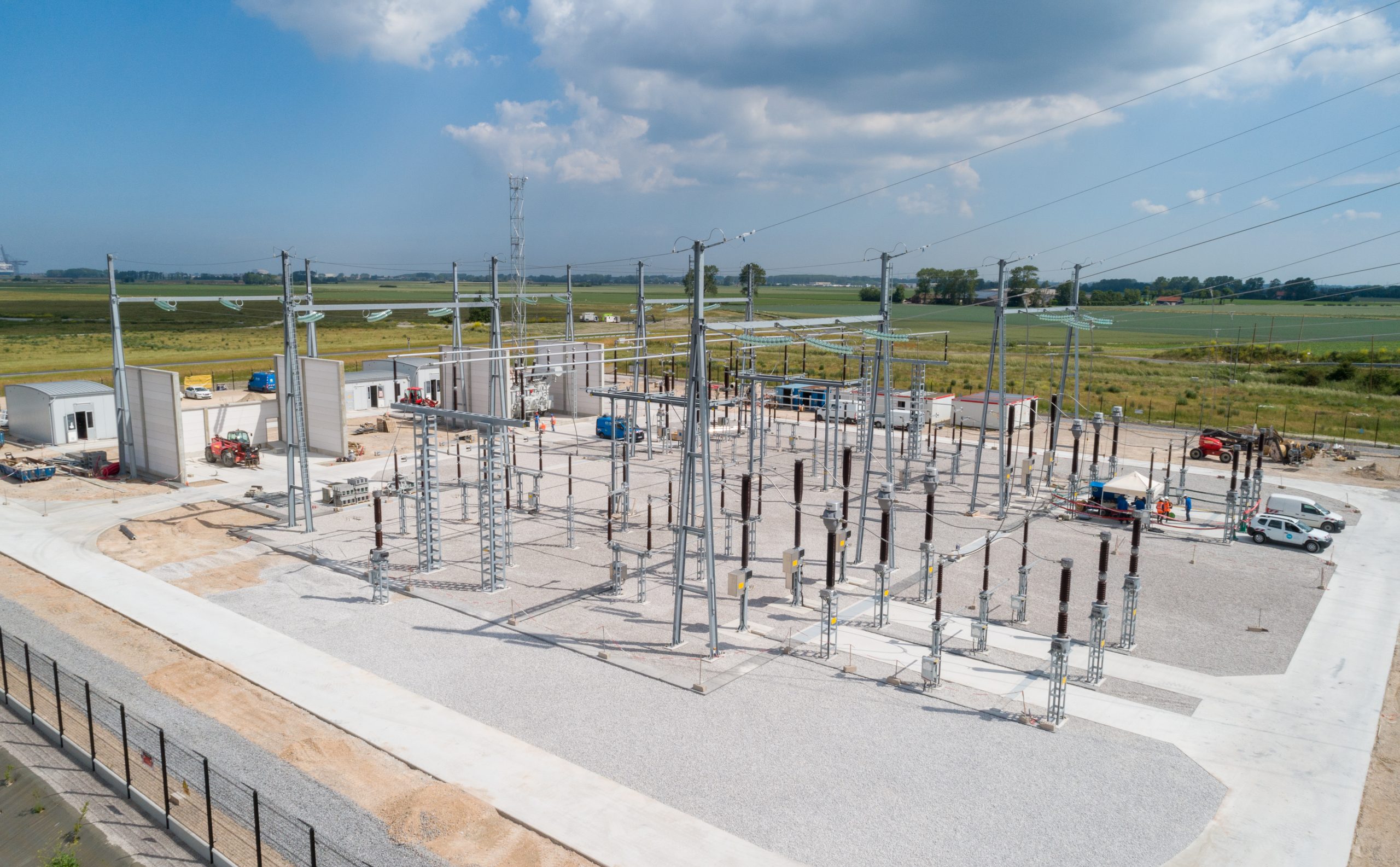
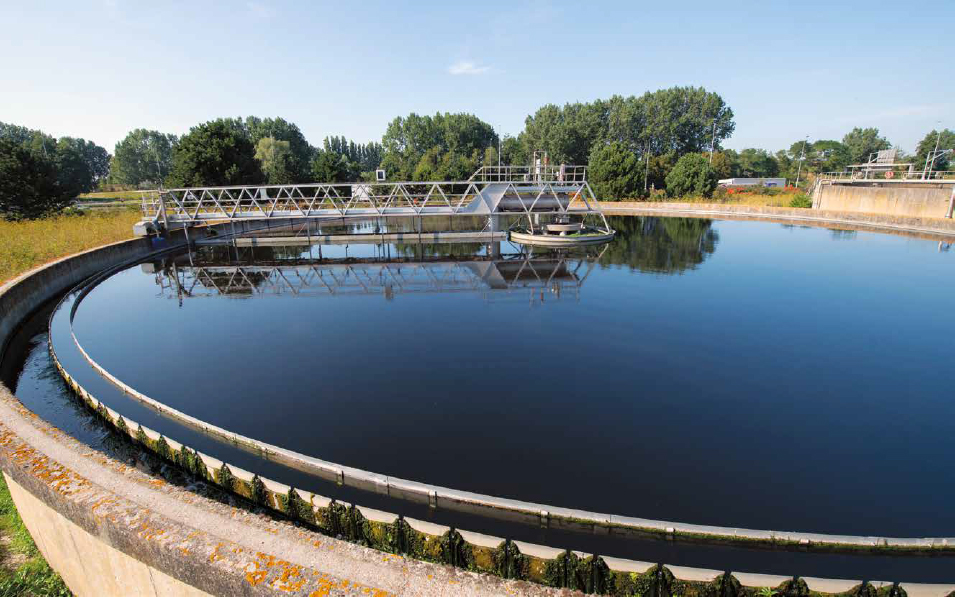
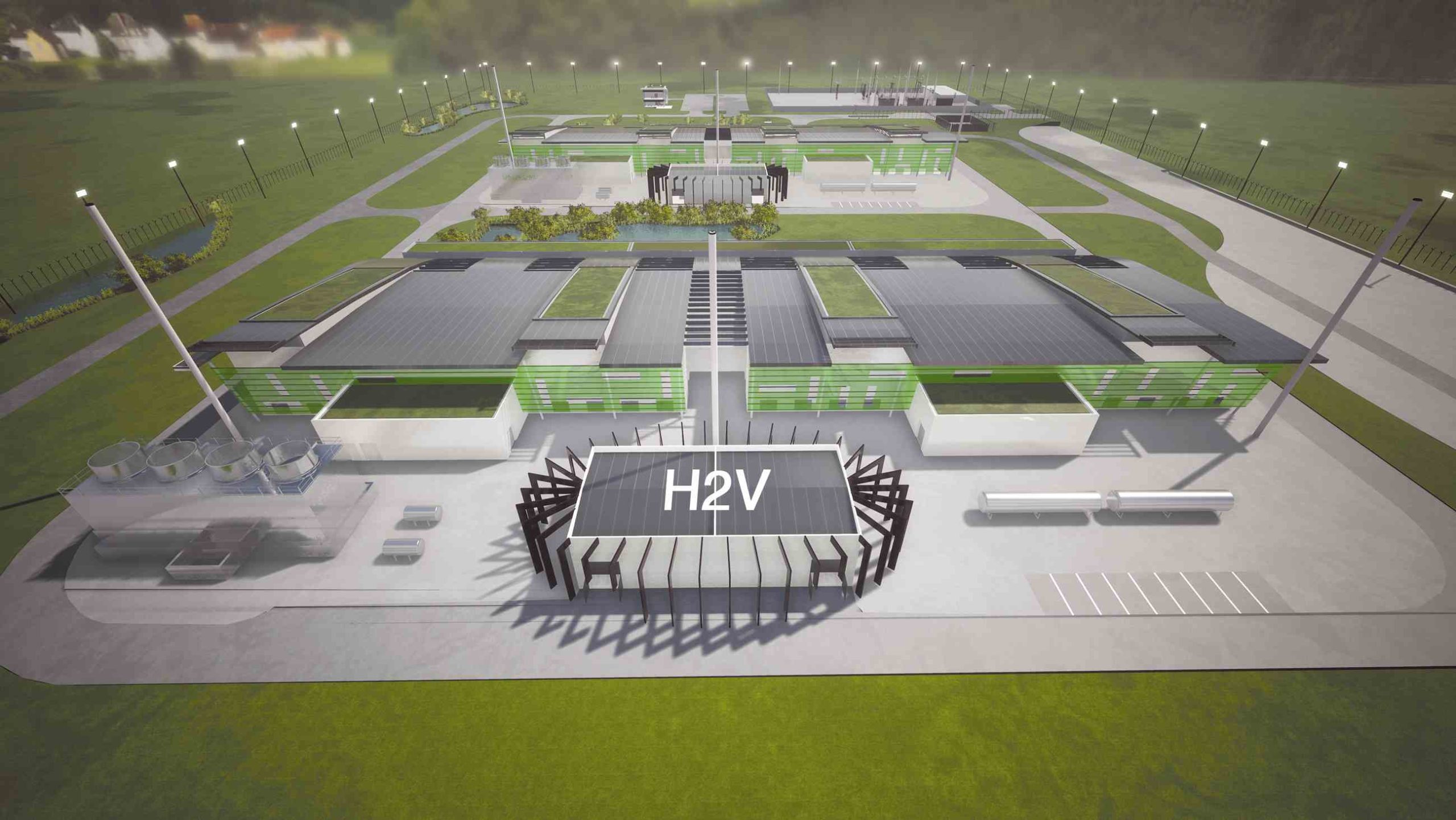
CONCRETE PROJECTS FOR A LOW-CARBON INDUSTRY
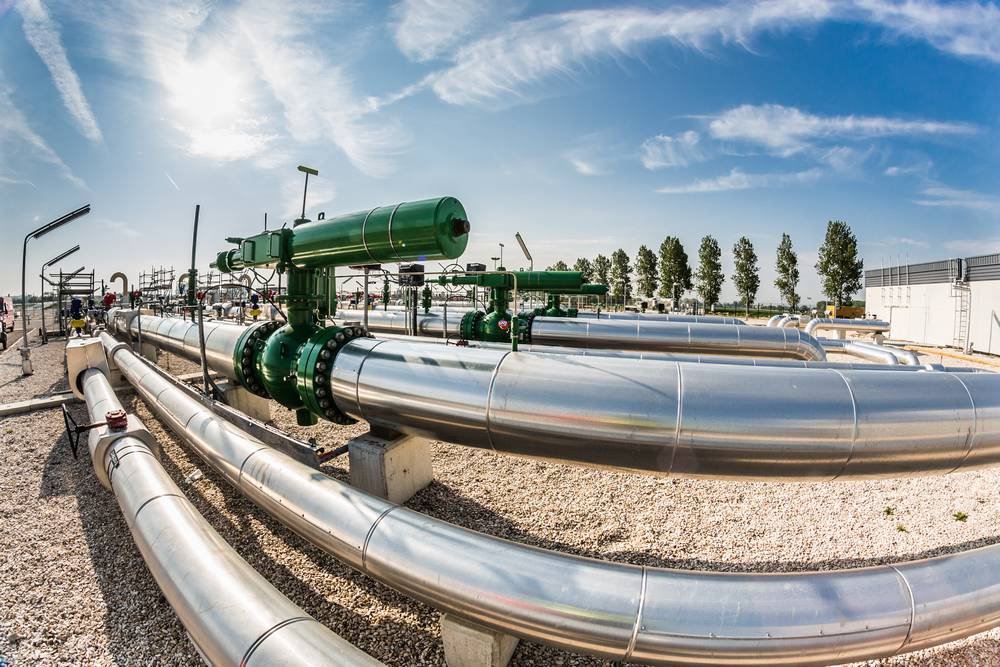
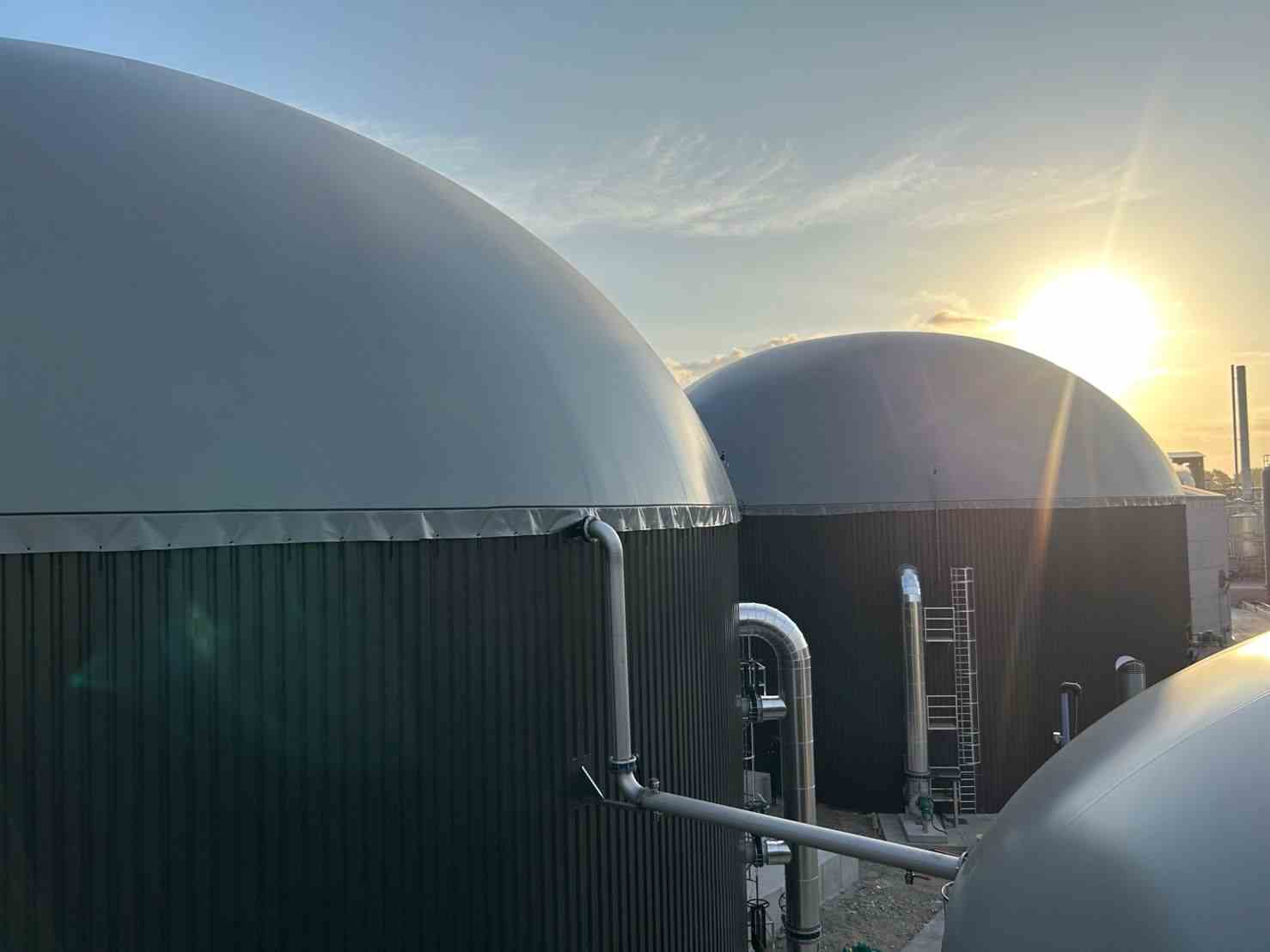
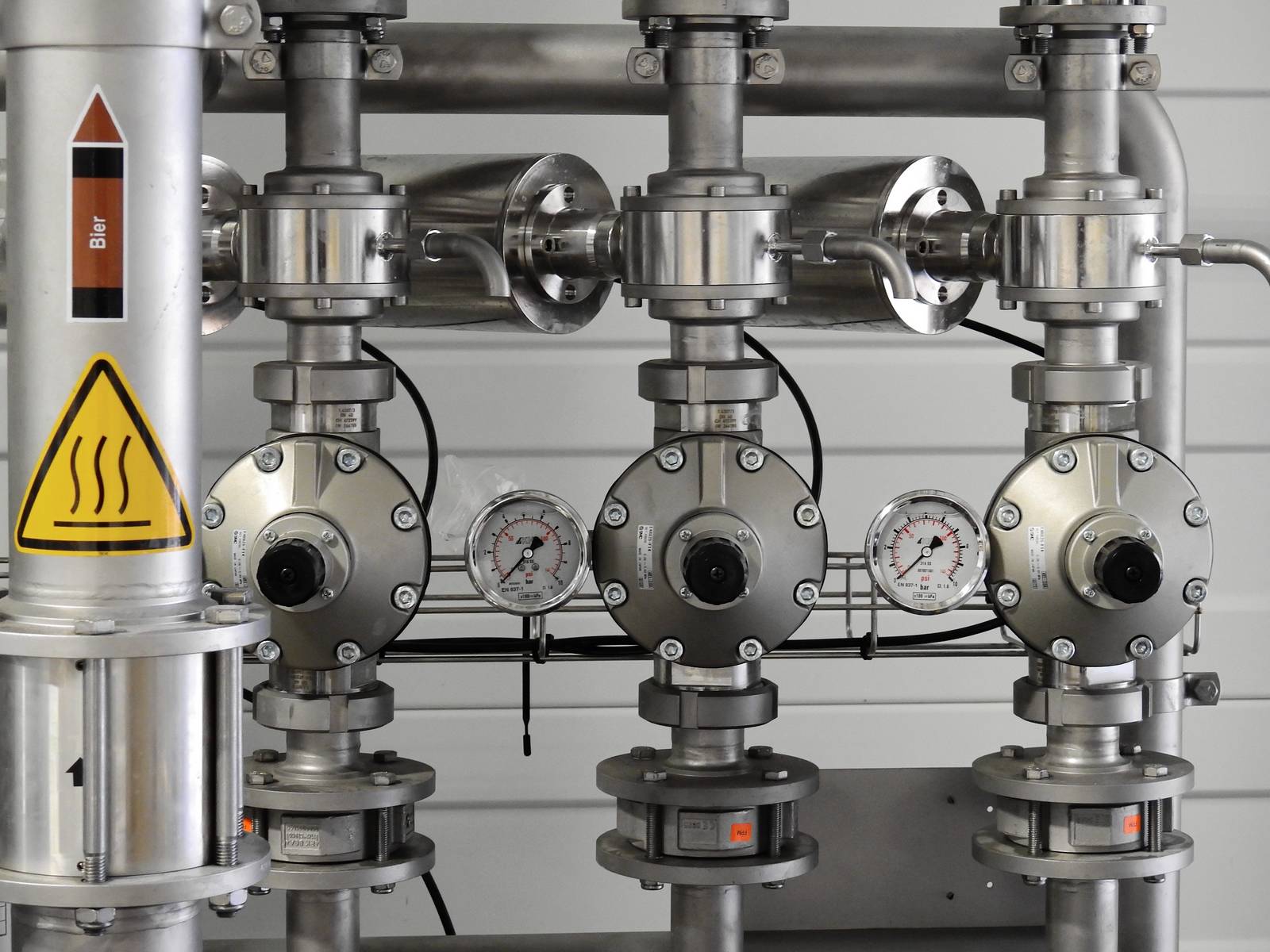
The Dunkirk region is positioning itself as a pioneer in the energy transition. Several large-scale projects, led by major industrial and energy players, are underway to accelerate decarbonisation: modernisation of production tools, CO₂ capture and recovery, use of more sustainable raw materials, etc.
Whether it be Comilog (new low-carbon furnace), D’Artagnan (CO₂ capture and transport infrastructure) or Imerys (decarbonised industrial solutions), these initiatives demonstrate a collective drive towards a greener, more competitive and resilient industry.
D’ARTAGNAN: A CO₂ INFRASTRUCTURE FOR DECARBONISATION
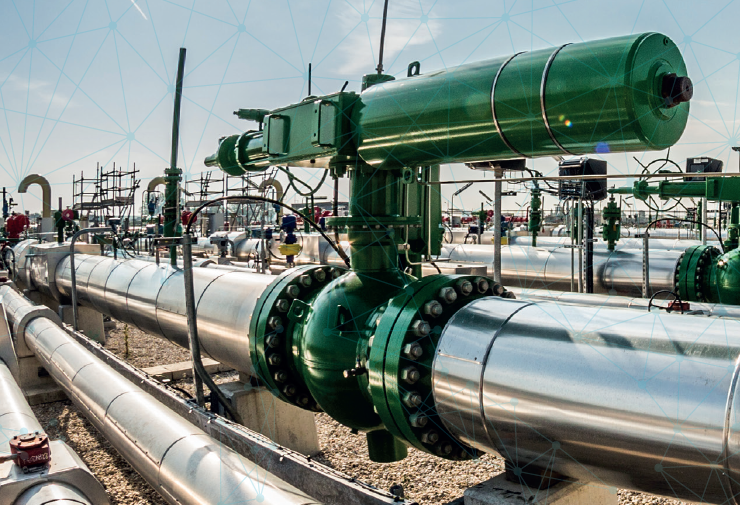
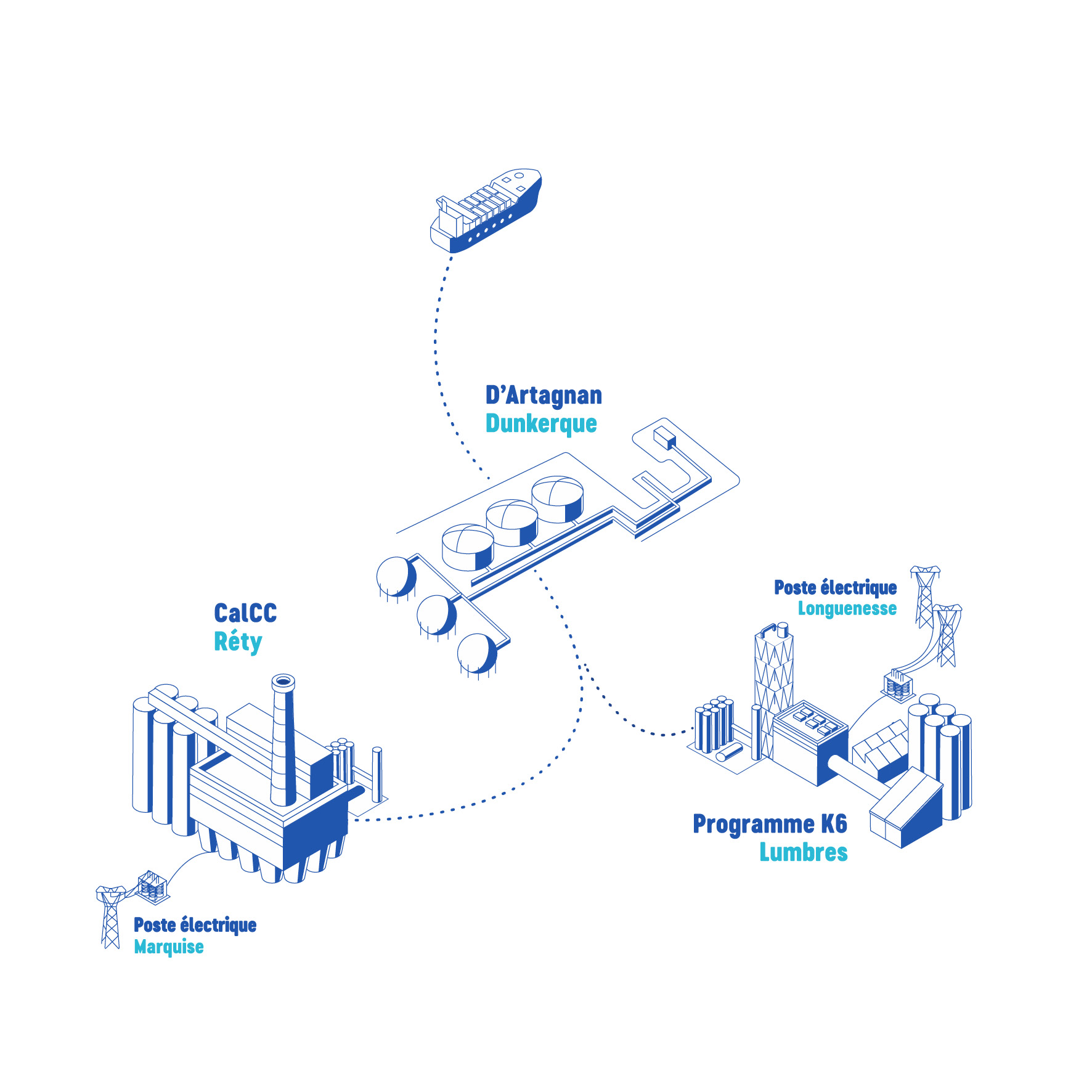
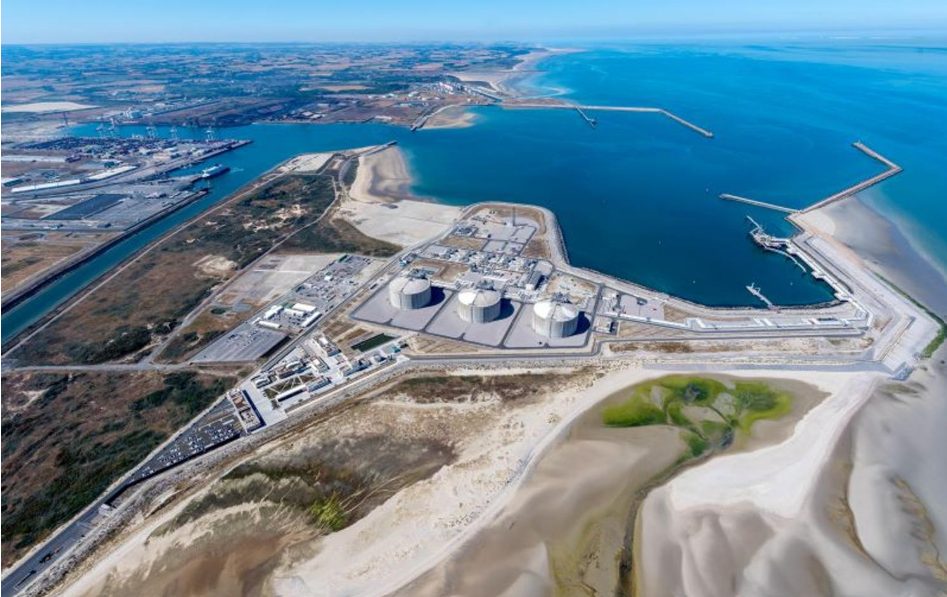
With €220 million in investment, the D’Artagnan project (Air Liquide France Industrie and Dunkerque LNG) plans to build an 80 km pipeline network and a CO₂ terminal in Dunkirk to transport, store and ship captured CO₂ to the North Sea.
This is a strategic step that makes Dunkirk a pioneer in European industrial decarbonisation.
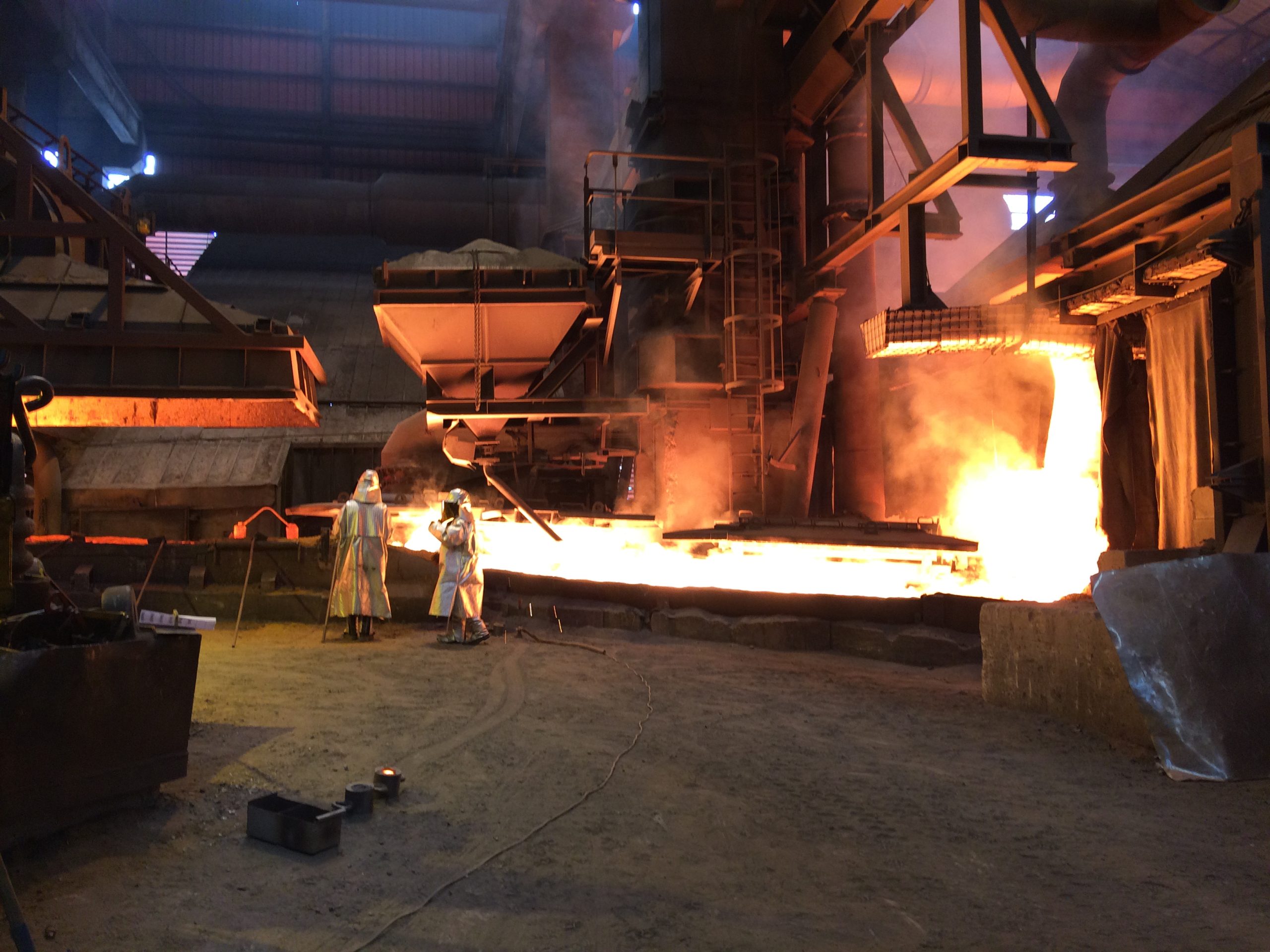
COMILOG GOES FOR DECARBONISATION
In Gravelines, Comilog (Eramet) is accelerating the decarbonisation of steelmaking with a new €42 million investment.
Its latest-generation pyrometallurgical furnace increases production by 20% while reducing CO₂ emissions by 50%.
The next step is to integrate biomass-based bioreductors to achieve low-carbon, or even carbon-neutral, steelmaking.
More aboutDUNKIRK, A TERRITORY WITH A LOW-CARBON INDUSTRY
Explore the brochure